
有料版『Footy English Playbook』では、より深い解説・実践・練習素材をお届けします。海外のサッカーファンや関係者と自信を持って英語で意見を交わすためのキーワード・文脈・ダイアログを手に入れよう!
Footy English Playbookの目的と構成
このコンテンツは、海外のサッカーファンと英語でコミュニケーションを楽しむための実践的なプレイブック(戦略集)です。毎回、以下の4つのステップで「自分の言葉で語る力」をサポートします。
- Input: 海外の記事を参考にしたオリジナルの英文を読みます。
- Analysis: キーワードやコンテクストを整理し、英文解釈を通して理解を深めます。
- Dialogue: スタジアムやパブ、SNSなどを想定し、会話の型を学びます。
- Recap: 今回のポイントを振り返ります。
1. Input
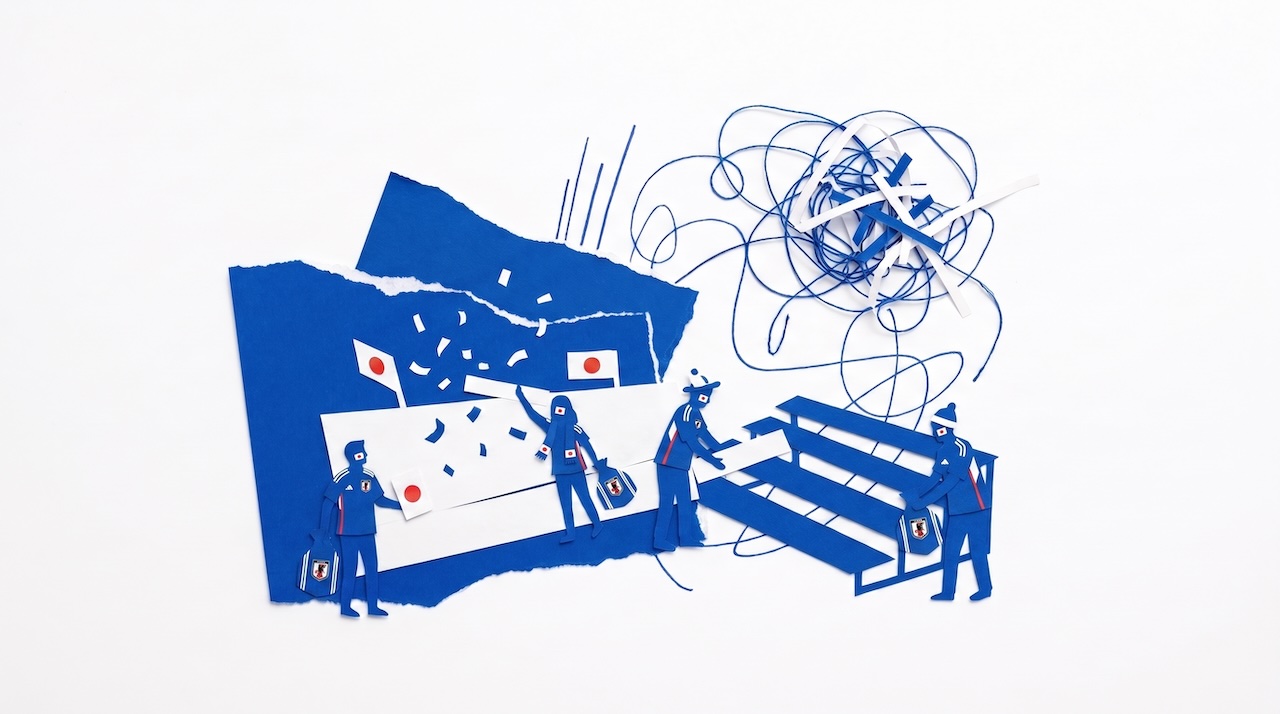
サッカー日本代表のサポーターのごみ拾いが議論を呼んでいます。英文を読んで海外の視点を理解しましょう。
Cleaning Up or Crossing the Line?
Japanese fans gained international attention at the World Cup in the United States, Canada and Mexico when they picked up rubbish in stadiums after matches against the Netherlands and Tunisia. In Japan, the practice of cleaning up is instilled from an early age; children are taught at school to clean their own classrooms. One person remarked, “It’s simply embedded in our culture. We always try to leave things tidy so the next person can use them comfortably.” Manager Hajime Moriyasu praised and defended the fans’ actions. However, a contrasting view from Brazil argues that such cleaning takes jobs away from stadium staff. Meanwhile, statistics show that Japanese men spend less time on housework than the global average, with some Japanese women commenting, “Please do it at home, too.”
語句・表現・文法の解説
- pick up rubbish:ごみを拾う。日常会話でも使えます。「pick up」は句動詞(phrasal verb)で、pickとupの間または後ろに目的語を置けます(pick up rubbish または pick rubbish up)。
- instilled from an early age:幼い頃から身に付ける。文化や習慣を説明する際に便利な表現です。「be instilled from…」は受動態(passive voice)で、何かが外部から与えられて身につくことを表します。
- embedded in our culture:文化に根付いている。背景や価値観を語るときに役立つフレーズ。「be embedded in…」も受動態で、何かが深く組み込まれている(根付いている)状態を表します。
- defended the fans’ actions:ファンの行動を擁護した。議論やインタビュー時に使えます。「defend」は他動詞(transitive verb)で、目的語(the fans’ actions)を直接後ろに置きます。過去形「defended」で使われています。
2. Analysis
キーワードやコンテクストを整理した後、英文解釈を通じて内容をより深く理解します。
1. Pick up rubbish
なぜ重要?
“pick up rubbish”(ごみ拾い)は、日本のサッカーファンが世界で注目された行動の1つ。単なる美化だけでなく、日本人の公共心や責任感、マナーの良さを象徴しています。
意味
ごみを拾う。英語では “pick up rubbish”(イギリス英語)や “pick up trash/garbage”(アメリカ英語)と表現します。
海外の視点
海外メディアやサポーターから驚きや称賛をもって報道され、日本人の文化や価値観の象徴的な行動と見なされています。しかし、ブラジルメディアや日本の女性は別の側面も指摘しました。
会話で使えるフレーズ
- Japanese fans are famous for picking up rubbish after matches.
- We should pick up rubbish before we leave.
英文記事などで見かける例文
After the match, Japanese supporters stayed behind to pick up rubbish in the stadium.
試合後、日本のサポーターはスタジアムに残ってごみを拾っていた。
日常会話への応用
We always pick up rubbish after our picnic.
ピクニックの後は必ずごみを拾います。
🔓 有料版コンテンツについて
本コンテンツに関心を寄せていただき、ありがとうございます。通常、AnalysisやDialogueは有料プラン限定となりますが、今回はサンプルとしてすべて公開しております。ぜひこのままお楽しみください。
2. Embedded in our culture
なぜ重要?
“embedded in our culture” は「文化に根付いている」という意味で、日本の掃除や整理整頓の習慣を説明する際によく使われます。
意味
何かが社会や文化の一部として深く根付いていること。
海外の視点
日本のごみ拾いや清掃活動は、単なるルールやマナーを超えて、文化そのものに深く根付いていると海外で評価されています。
会話で使えるフレーズ
- Cleaning is embedded in our culture.
- Respect for others is deeply embedded in Japanese society.
英文記事などで見かける例文
The habit of cleaning is embedded in our culture from an early age.
掃除の習慣は幼い頃から私たちの文化に根付いている。
日常会話への応用
Politeness is embedded in Japanese culture.
礼儀正しさは日本文化に根付いています。
3. Defend one’s action
なぜ重要?
“defend one’s action” は、誰かの行動や決断を公に支持・擁護する時に使う表現。海外で話題になった日本のファンの行動を森保監督が擁護したときなどにピッタリです。
意味
誰かの行動や判断を正しいと主張したり、公に守ること。
海外の視点
国際的な称賛や賛否の声に対し、自国文化への誇りや理解を示す場面で使われることがあります。
会話で使えるフレーズ
- The coach defended the fans’ actions at the press conference.
- He defended his decision to pick up rubbish.
英文記事などで見かける例文
Moriyasu defended the supporters’ actions, saying it reflects Japanese values.
森保監督は、サポーターの行動が日本の価値観を表していると擁護した。
日常会話への応用
My friend defended my actions when others criticised me.
他の人に批判されたとき、友人が私の行動を擁護してくれた。
英文解釈
日本のサッカーファンが試合後にスタジアムでごみを拾う行動は、文化に根付いた習慣として国際的な注目を集めました。一般的に日本では、学校で教室を掃除する経験などを通じて、「使った場所をきれいにして次の人に渡す」という意識が子どもの頃から身に付いています。一方、ブラジルなどからは「現地スタッフの仕事を奪うことになるのではないか」という批判も出ており、清掃行為をめぐる価値観の違いが浮き彫りになっています。さらに、日本人男性の家事時間が国際的に見ても短いという指摘も紹介され、公共の場での振る舞いと家庭内での行動とのギャップにも目が向けられています。今回の英文は日本のごみ拾い文化を単なる美談としてではなく、称賛、批判、ジェンダーの視点が交錯するテーマとして描いている点が特徴的です。
Quiz
What does the headline “Cleaning Up or Crossing the Line?” suggest about the Japanese fans’ actions at the World Cup?
A) They are just cleaning up after themselves.
B) They are following stadium rules.
C) Their cleaning might be seen as going too far or interfering with others’ roles.
D) They want to become stadium staff.
Answer
C
3. Dialogue
この話題について海外のサッカーファン(F)と日本人(J)がコミュニケーションする場面を想定して、3つのコミュニケーションスタイルを見てみましょう。
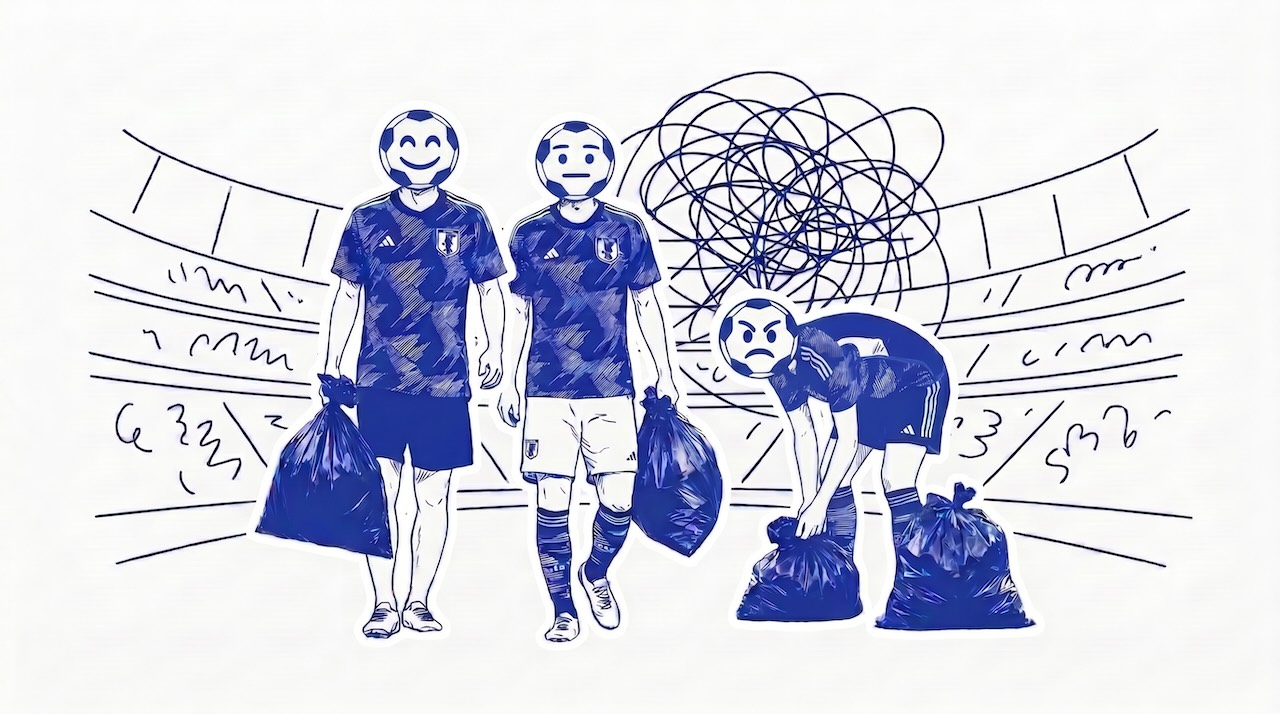
1: 意見交換
建設的な意見を交わすパターン。

I get why everyone praises the Japanese fans, but honestly, it’s inadvertently taking jobs from stadium staff. They need those hours to get paid.
みんなが日本のファンを褒める理由はわかるけど、正直、結果的にスタジアムのスタッフから仕事を奪ってるんだよ。スタッフには給料をもらうためにその時間が必要なんだ。

That’s a fair point. To be honest, it’s just a habit we learned in school, so I hadn’t considered the labour side of it. We’re just trying to show respect, but I completely understand the backlash.
それはもっともな意見だね。正直言うと、学校で習うただの習慣なんだ。だから労働面については考えてもみなかったよ。ただ敬意を示そうとしてるだけなんだけど、その批判は完全に理解できるよ。
Yeah, it’s just a culture clash. No one thinks you guys are doing it maliciously.
ああ、ただの文化の衝突だよ。誰も君たちが悪意を持ってやってるなんて思ってないさ。
解説
- That’s a fair point. 「それはもっともだね」とまず受け止める姿勢が、建設的なコミュニケーションの第一歩。
- Just a habit we learned in school. 「学校で習った習慣にすぎない」と自分の背景を説明。
- I completely understand the backlash. 「批判も理解できる」と共感を示すことで対立を和らげる。
2: ユーモア
相手の称賛や過度な反応に対し、あえてユーモアを交えて切り返すパターン。
Saw the Japanese fans cleaning up again on TV. Absolute class act. Wish our fans did that instead of smashing seats.
テレビで日本のファンがまた掃除してるの見たよ。マジで最高だね。俺たちのファンもシートを壊す代わりにアレをやってくれればいいのに。
Thanks! Everyone is worried about AI stealing jobs, but I never thought we were the ones taking them with blue trash bags! Next time, I’ll just do it secretly like a ninja so no one complains.
ありがとう! みんなAIが仕事を奪うって心配してるけど、まさか僕らが青いごみ袋で仕事を奪ってるとは思わなかったよ! 次は誰にも文句を言われないように、忍者のようにこっそりやるよ。
(Laughs) Ninja cleaners! Love that. Just don’t let the union catch you.
忍者クリーナー(笑)! 最高だね。労働組合に見つからないようにしろよ。
解説
- I’ll just do it secretly like a ninja. 「忍者のようにこっそりやるよ」とユーモアを交えることで場を和ませる。
3: 一言フレーズ
サクッと意見を言いたいときに使えるフレーズです。
【相手の批判に理解を示す場合】
I understand the point about local workers. For us, leaving a place cleaner is manners, but I get the backlash.
地元の労働者についての言い分は理解できる。使った場所をきれいにして帰るのはマナーだけど、その批判もわかるよ。
【文化の違いをスパッと説明する場合】
It’s just a culture clash. We aren’t trying to steal jobs inadvertently; it’s just a habit from elementary school.
ただの文化の衝突だね。意図せず仕事を奪おうとしてるわけじゃなくて、小学校からのただの習慣なんだ。
4. Recap
今回のキーワードを振り返りましょう。応用例としてもう1フレーズ、さらにクイズもあります。
1. Pick up rubbish
- We pick up rubbish after games.
- Picking up rubbish is just a habit for us.
2. Embedded in our culture
- It’s embedded in our culture.
- Cleaning is embedded in Japanese culture.
3. Defend one’s action
- The manager defended the fans’ actions.
- I’d like to defend our actions.
Cleaning is embedded in Japanese culture, though I admit it can look as if we’d brought our school rules to the stadium.
掃除は日本の文化だけど、外から見たら、学校のルールをスタジアムに持ち込んじゃったように見えるのかもしれないですね。
表現の意味だけでなく、その裏にある文化や視点まで押さえることで、海外のサッカーファンとも一歩深い会話ができるようになります。
Quiz
After a match, you hear fans say, “Let’s leave the place spotless.” What does “spotless” mean in this context?
A) Very noisy
B) Completely clean
C) Crowded with people
D) Decorated with team colours
Answer
B
Source
AFP. Japan coach ‘proud’ of tidy fans – as long as cleaners stay in work. June 20, 2026
Khaleej Times. Japan fans win hearts again by cleaning up stands after 4-0 victory. June 22, 2026